
Uncategorised
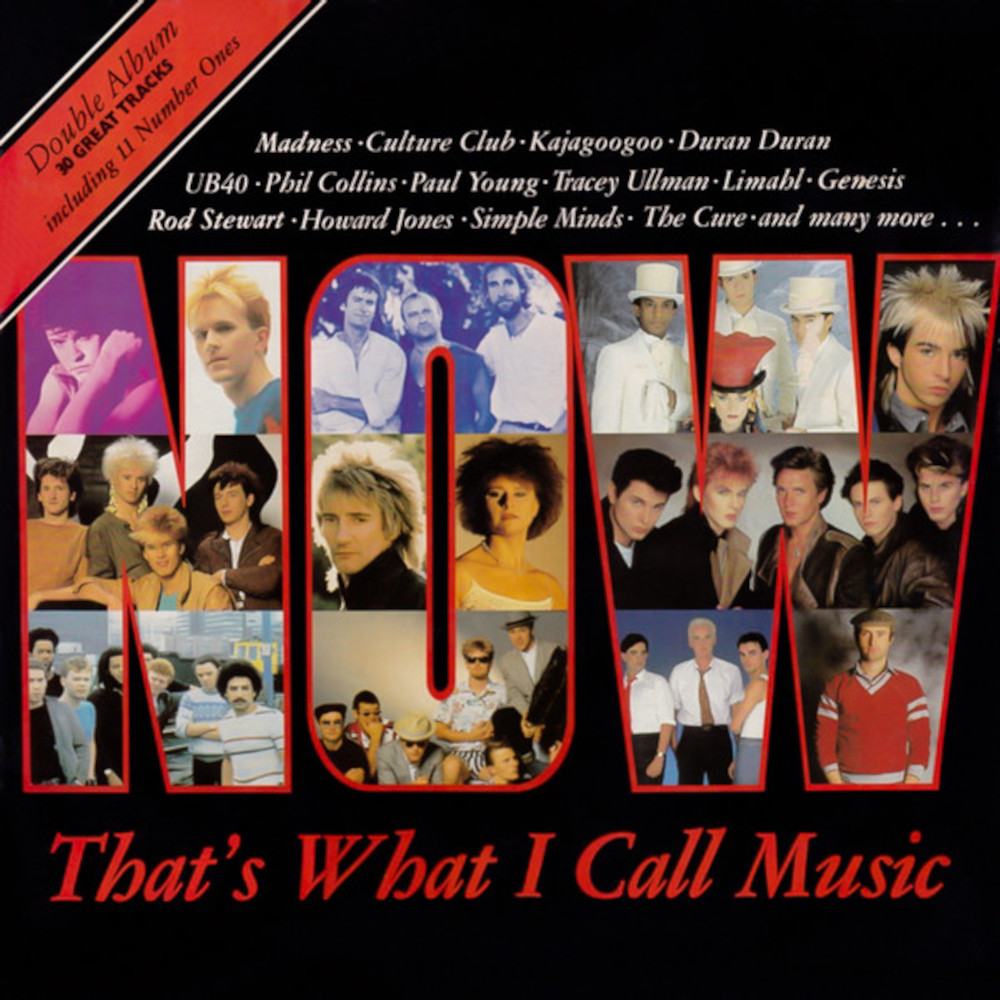
NOW That’s What I Call Music! 1 — November 1983
Sep
NOW That’s What I Call Music! 1
November 1983
November 1983 was a strange, polarised time to be alive in the UK. On the nightly news, the world felt like it was actively teetering on the edge of a cliff. Intense Cold War anxiety was at a fever pitch as American Cruise missiles arrived at RAF Greenham Common amid furious CND protests. Just a few days before this album dropped, six armed robbers walked into the Brink’s-Mat warehouse at Heathrow, poured petrol over the staff, and walked out with £26 million in gold bullion. It’s a heist so legendary that street wisdom still dictates that if you bought a gold ring or chain in the UK anytime after Christmas ’83, the chances are exceptionally high that you are currently wearing a piece of that stolen Brink’s-Mat gold.
Yet, if you flipped the channel away from the grim reality of the evening news, the culture was throwing up an aggressive screen of hyper-polished, brightly coloured, sun-soaked pop music. It was against this backdrop, on Monday, 28th November 1983, that a corporate hook-up between Virgin and EMI gave birth to a double-album juggernaut.
NOW That’s What I Call Music! 1 had arrived.
The 12-Year-Old “Serial Killer” in the making
The music industry designed this compilation to be the ultimate Christmas stocking filler for the UK’s trendy teenagers. Naturally, I didn’t get a copy. Santa instead left me a tape called Superchart ‘83. My brother got a 48k Oric 1 computer (the bargain-bin equivalent to the Sinclair Spectrum), and I was given a Stormer BMX, the budget alternative to the Mongoose that I actually craved. We were a staunchly dedicated Betamax family. Looking back, it’s clear my household specialised in the alternative option.
I did eventually secure Now 1 on cassette a few days after Boxing Day, using WH Smith vouchers that were practically burning a hole through my pocket.
At twelve years old, I possessed absolutely zero style. While pop stars were preening in eyeliner and oversized suits on Top of the Pops, I was permanently dressed as the “army man”. My daily uniform consisted of a heavy camo jacket and matching trousers. I walked with a distinct, heavy crunching rattle because my pockets were entirely filled with tin cans of .177 airgun pellets.
I was, for all intents and purposes, an armed pre-teen. For my birthday, my parents had bought me a Diana SP50 air pistol. To facilitate this concealed weapon, my mum lovingly hand-crafted a shoulder holster fashioned entirely from green corduroy offcuts.
So picture the scene: a 12-year-old kid trudging through rural fields in wellies, rattling like a toolkit with an air pistol hidden in a homemade corduroy holster, heading to the local library to borrow a Dennis Wheatley occult novel.
But the occult wasn’t the only thing drawing me to the library. Once I’d secured my weekly dose of Satanic panic literature, I would casually drift over to the periodicals rack. My target? Amateur Photographer magazine. In the pre-internet landscape of November 1983, a 12-year-old boy had to be resourceful, and the lighting and composition test pages of a photography journal offered a very high probability of copping a glance at a free pair of tits under the guise of “fine art.”
Carrying a concealed weapon, reading about black magic, and sweating over lens-testing pages in the reference library, I looked like a textbook serial killer in the making. If a parent allowed their kid to roam the countryside like that today, social services would be down on them before the pellets even hit the tin can.
But beneath the camo, I was beginning to morph. The childhood sport of using a plastic frisbee to launch dried cowpats across the grazing fields was losing its lustre. Music was starting to speak to me, my self-image was shifting, and I was finally starting to notice girls.
What We Were Watching on the Telly
If I wasn’t terrorising the local population with an air pistol, my backside was firmly planted in front of the television. In November ’83, Monday evening TV was a highly structured affair:
- 5:35 PM (BBC1) — Willo the Wisp: Rushing home to catch Kenneth Williams voicing a sassy caterpillar and an evil television set named Evil Edna. Perfect post-school decompression.
- 6:40 PM (BBC1) — The Dukes of Hazzard: The ultimate Monday night escapism. General Lee jumping over barns was mandatory viewing.
- 8:00 PM (ITV) — In Loving Memory: I absolutely detested Thora Hird as the Yorkshire undertaker, but Christopher Beeny’s ears and accident-prone antics kept me hooked.
- 9:00 PM (ITV) — Quincy, M.E.: The absolute holy grail. This was the only show on television I was legally allowed to stay up until 10:00 PM to watch. Jack Klugman shouting at his forensic monitors was the perfect end to the night.
The Tracks That Defined the Times
Re-listening to the 30 tracks on Now 1, some sections have aged like fine wine, while others feel like a time capsule from a completely different planet. The compilation proudly boasted an insane 11 UK Number One singles out of its 30 tracks, proving how much of a heavy hitter it was for the Christmas market. Yet, it also found room for lower-charting heavyweights; the track with the lowest peak chart position on the album was actually Genesis with “That’s All”, which had only reached Number 16 on the UK Singles Chart.
Here are the four tracks that instantly teleport me back to November 1983:
1. Culture Club — “Karma Chameleon”
You could not escape Boy George in late 1983. The music press and the daily tabloids were entirely obsessed with him—he couldn’t fart in public without it becoming a front-page headline. On the very week Now 1 was released, he made the front page of the Daily Mirror for dropping an “airport clanger,” having an argument with a security guard at Heathrow over a hairgrip. But on the vinyl groove, this track was an absolute pop masterclass that dominated the summit of the charts.
2. The Cure — “The Lovecats”
It staggers me to my very core to realise this song is over 40 years old. Amidst a sea of highly manufactured synth-pop, Robert Smith delivered something wonderfully eccentric, jazzy, and strange. It sounded completely detached from the rest of the album, and it’s one of the few tracks from this volume that still sounds incredibly fresh today.
3. Men Without Hats — “The Safety Dance”
The ultimate 1983 novelty synth-pop anthem. You can’t listen to that literal bop-along beat without visualisation of the bizarre medieval-themed music video featuring a wandering minstrel and a literal court jester. It’s gloriously dated, but it perfectly sums up the joyous, slightly unhinged nature of early ’80s pop radio.
4. Simple Minds — “Waterfront”
This was the exact moment Jim Kerr and the boys decided they wanted to play stadiums. That chugging, relentless bassline and atmospheric guitar drone felt massive. It was a stark, gritty contrast to the lighter pop on the compilation, and it gave a hint of the massive, sweeping rock sounds that would dominate the mid-to-late ’80s.
What the Music Press Was Saying (Smash Hits)
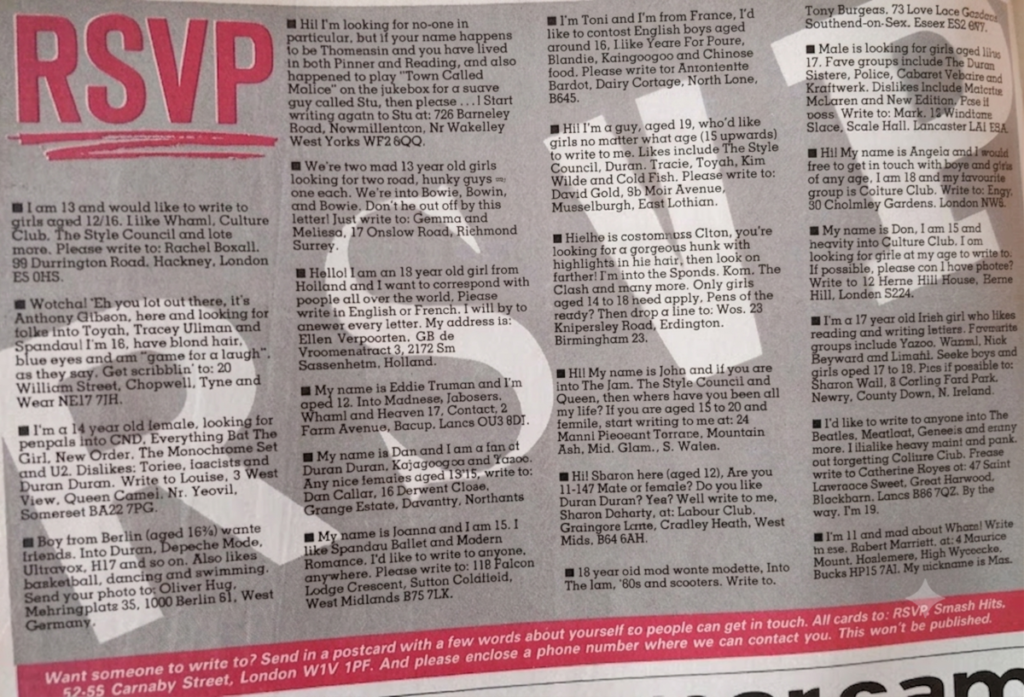
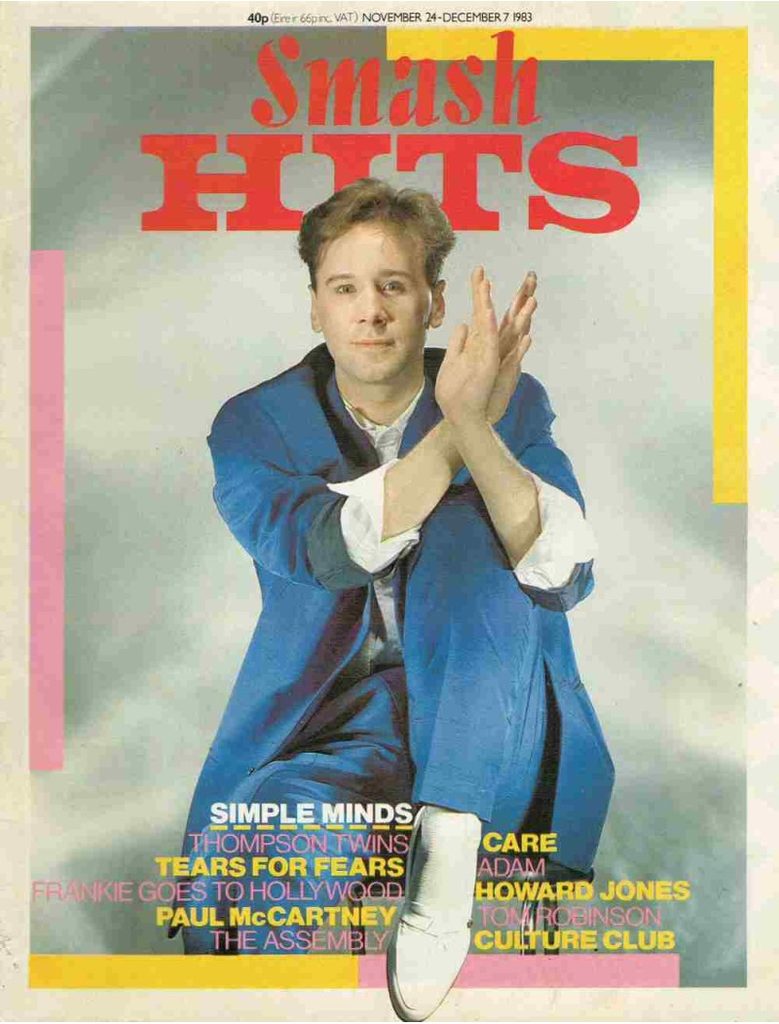
Looking back at the Smash Hits issue from November 24th, 1983, the most mind-boggling section isn’t the reviews or the glossy posters—it’s the RSVP pen-pal section.
Reading it now feels like looking directly into a pre-internet Wild West. The casual, unmonitored nature of it is wild. In this specific issue, right next to teenagers looking for fans of Duran Duran or Wham!, sits a circled classified ad from a 19-year-old bloke openly asking for “girls no matter what age (15 upwards)” to write to his home address because he likes The Style Council and Toyah.
This was 1983, a time when the BBC’s future Operation Yewtree alumni were at the absolute height of their powers, and the print media was casually running personal ads that would bring down an entire legal department today.
